
Anime has been both good and bad since it first started getting made. As I look back on my anime-watching this year, I find this a helpful axiom to recall, along with its associated evidence. That said, it is probably equally true that the particular ways in which anime has been both good and bad over the years have changed.
I. Setting the Stage
When I first began this post, which is the fourth installment of an annual series that I began in 2022, I had fully intended to only do what I have done in years past: provide a ranked list, from least-good to most-good, of all the anime I watched this year.
Then I put together the list and witnessed just how short that list was. The titles I have to report on this year number a mere 15 (sixteen after I binged Aquarion MOE before Christmas and seventeen after I remembered The Colors Within released back in January). This is down from 30 in 2023 and 19 last year, a clear three-year downward trend. Admittedly, there are contextual factors: this year, I moved homes for the first time in a decade, I spent a good chunk of time writing a second (!) anime-inspired book, I took a 2.5-week-long trip to Japan, and I’ve been more involved in social, volunteer, and fitness activities than at any other point in my post-college life.
Even so, I certainly could have watched a lot more anime this year had I so desired. I continue to take a look at upcoming seasonal anime charts to see what new treats might be headed our way every 3 months. Beyond that, there are still plenty of great things to watch that were made in years past, even if the conditions of legal streaming archives continue to deteriorate with the ever-expanding corporate exploitation of anime.
So, what’s going on?
I do want to be very careful here to avoid cliché. I’m not really ready to go full old-man-shouting-at-the-clouds about how anime used to be better, but I’m likewise not keen to say, “It’s not you; it’s me,” or to proclaim that I’ve fallen out of love with anime. Or, to be more precise, I don’t think I can say I’ve fallen out of love with anime (as a broad category); but I might be able to say I’ve fallen out of love with anime (as a whole in its current entertainment commodity form).
During those periodic examinations of the upcoming seasonal anime charts, I often find myself experiencing a sort of light dread—the kind of thing when an ultimately inconsequential yet nonetheless unhappy conclusion is on the horizon. Each upcoming season on Anichart is loaded with an combination of isekai, romcoms with plasticky character designs, otome-game-based villainess stories, and basic shounen scramble. Few, if any, have key visuals that promise any sort of distinctive art direction or creative vision, and all have the unavoidable guillotine blade that is the overloaded industry’s likelihood of production implosion hanging over their head.
Obviously, there are exceptions (we’ll speak of them later), but I find the overall situation enthusiasm-sapping. And that’s before we even get to fragmented distribution and degradation of streaming service quality. Don’t you just love Capit “Competition Results in Better Products for Consumers” Alism?
Note: The rest of this post features long interludes between the listings of anime I watched. I don’t want to make those who just want to read about anime to be forced through my inane ramblings, so I’ve excerpted that material to the end of the post via links. However, those sections do flow out of the discussion of the anime, so I’ve kept their headings in line so the bravest of you can read the whole piece in the most proper order.
II. The Bottom Four
17. The Water Magician (Typhoon Graphics, Summer 2025)
16. Colorful Stage! The Movie: A Miku Who Can’t Sing (P.A. Works, Winter 2025)
15. Urusei Yatsura 2: Beautiful Dreamer (Studio Pierrot, 1994)
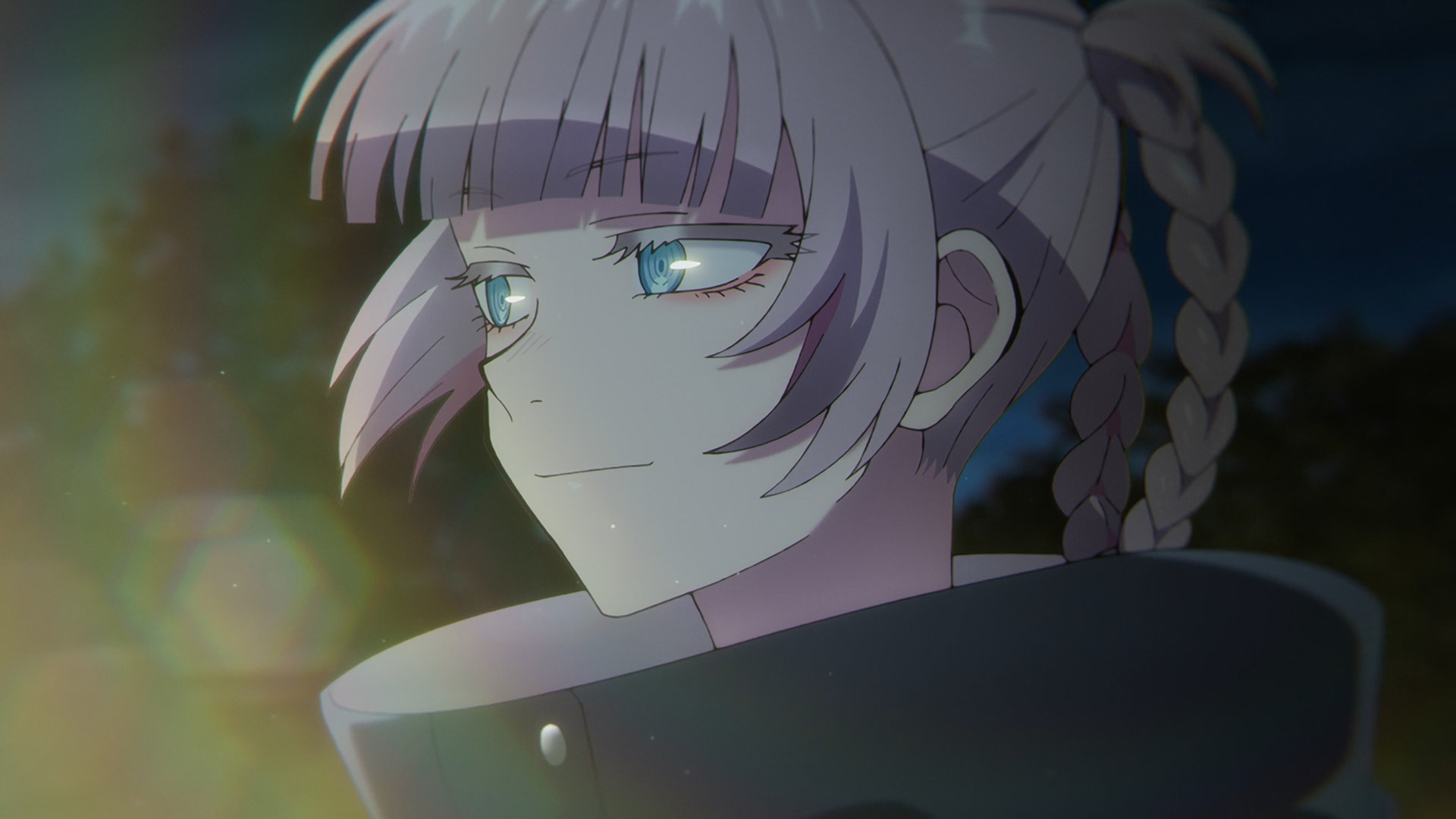
14. The Secrets of the Silent Witch (Studio Gokumi, Summer 2025)
As I said in the introduction, anime has always been both good and bad. Urusei Yatsura 2: Beautiful Dreamer is the evidence I alluded to of this statement’s truth. I admit to being quite amused by the film’s Wikipedia page waxing impressed over the “emphasis on philosophical issues,” which to me seems to be quite the generous read of a movie that’s basically just a worse version of The Disappearance of Haruhi Suzumiya with lead lacking character traits even approaching compelling. Sure, it does look nice, but Beautiful Dreamer is a pretty good reminder that historical value doesn’t necessarily make a work of art good.
That said, even a film so lacking in appeal has a certain level of creative energy that The Water Magician utterly lacks. I was baited by Shougo Teramoto’s Shingo Yamashita-influenced OP, which promises a show that basically does not exist, and then I stuck around—hoping, I guess, for even a fragment of the OP’s hallucinated joy. Instead, I got a show completely uninterested in its own premise (so many isekai can’t even be bothered to consider of the implications of being resurrected in another world). It’s not interested in its world either, nor, really, in its characters. In fact, it doesn’t really seem to be interested in much of anything at all, leaving me wondering why it exists at all. Beautiful Dreamer, as unappealing as I found it, at least seems to think Ataru is amusing and entertains its own goofy ideas. What ideas does The Water Magician have?
Well, maybe the Proseka movie, with its great subtitle, has answers for us: making money. A Miku Who Can’t Sing sucks for the reasons you’d expect a gacha tie-in film to suck: its obligation to give every fan a look at their favorite character means a bloated cast restricts its narrative capacities, its obligation to sell new music means we don’t get any actually good Vocaloid songs, and its obligation to do nothing more than encourage fans to spend money means it lacks any real attempt to do anything of interest.
In this way, it actually feels a bit mean to group The Secrets of the Silent Witch with these other three, as I did generally enjoy it and also don’t think it’s quite as creatively bankrupt as its aforementioned contemporaries even if it sometimes transitioned quite abruptly between story beats. Certainly, it was more enjoyable than Beautiful Dreamer. And yet, despite including appeal points such as double Hitsujibungaku themes, a Wilhelmina Carmel regen, and a deadpan imouto who feels like a Monogatari character, it, too, stands emblematic of my issues with current-day anime.


III. The Secrets of the Silent Witch: A Case Study
IV. When You Watch So Little You’re Already to the Good Stuff
13. Apocalypse Hotel (CygamesPictures, Spring 2025)
12. The 100 Girlfriends Who Really, Really, Really, Really, Really Love You – Season 2 (Bibury Animation Studio, Winter 2025)
11. Kanon (Kyoto Animation, 2006)
In this section, we have some interesting counterpoints to things I’ve already talked about, starting with Apocalypse Hotel, a show to whom I can give the great compliment of saying that it sort of reminded me of Concrete Revolutio, both structurally and with its unique sense of whimsy. The comparisons end there, and Yachiyo’s crew never really had the depth of insight that Jiro and his lot brought nor the depth of melancholy the show teased at to match Conrevo‘s political commentary, but it was still an enjoyable experience.
The return of 100 Girlfriends brought with it the same kind of passion for love that the first had, and its no-holds-barred approach to basically every moment made it again a delight to watch. I’m always asking for more Karane content, but sadly taking away her tsun (although I have to admit deredere Karane was pretty cute) wasn’t exactly what I meant when I said it. I wasn’t super enthralled by any of the new girlfriends, but it’s to the show’s credit that it remains eminently watchable even if your bias isn’t in focus (shoutout to my friend fts for his hilarious translation work).
And then, we have Kanon, which despite residing at number 10, is probably much higher in terms of memorability. The Makoto arc that leads off the heroine-focused sections is probably one of the goofiest things I’ve seen in anime: a profoundly odd mixture of Benjamin Button/memory loss/it-really-reads-as-dementia ideas that are horribly at odds with the romance thing (no, Yuuichi, you should NOT marry your dementia fox!!) and smashes across the line between drama and comedy. What follows after that isn’t quite as much Content (although we do like ahaha! girl and Ayu truly is an angel), but there’s certainly a certain tone to Kanon that makes it feel quite singular. I had a great time with it, even if I might value it more as an artifact of its times than for its own charms.

V. What is Creativity? What is Passion?
VI. Pleasant Stuff
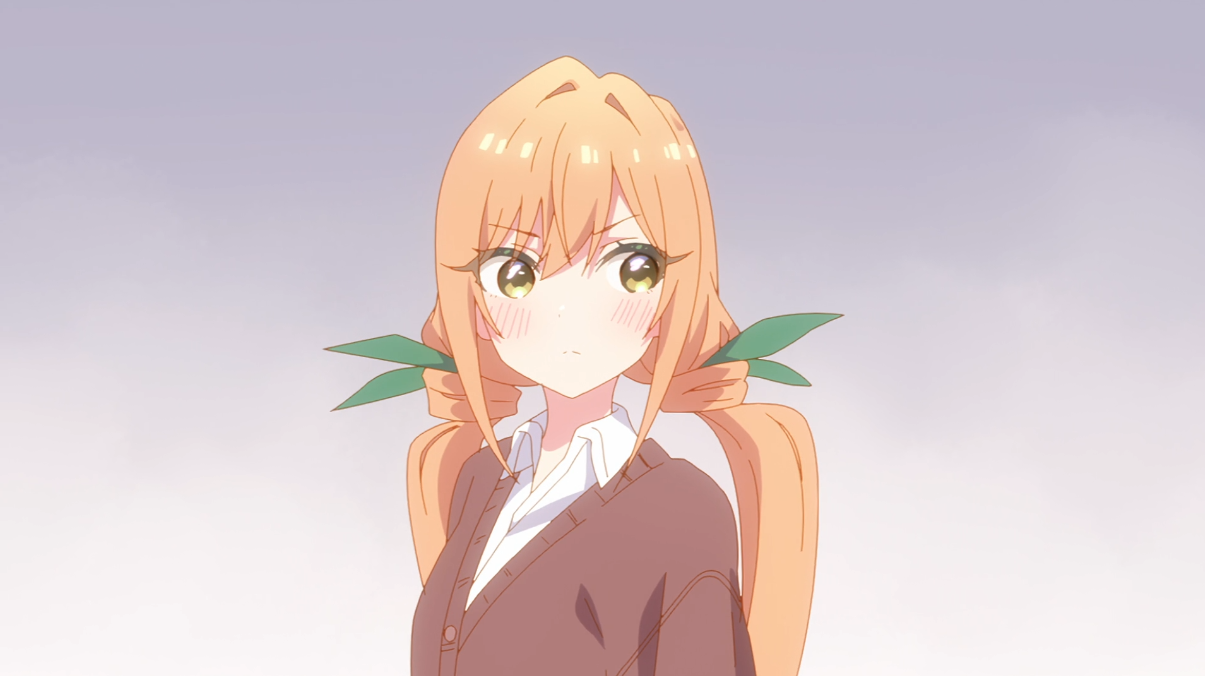
10. Sketchbook Full Color’s (HAL Film Maker, 2007)
9. R.O.D. Read or Die OVA (Studio Deen, 2001-2002)
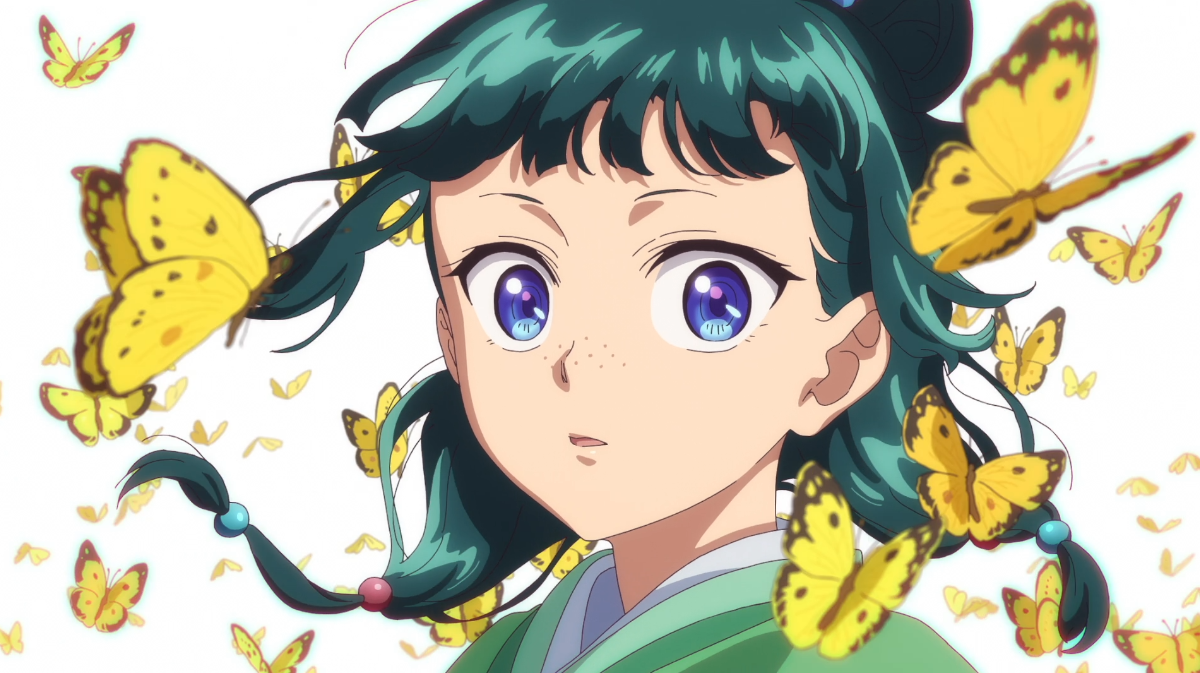
8. Kusuriya no Hitorigoto – Season 2 (TOHO animation STUDIO x OLM, Winter 2025)
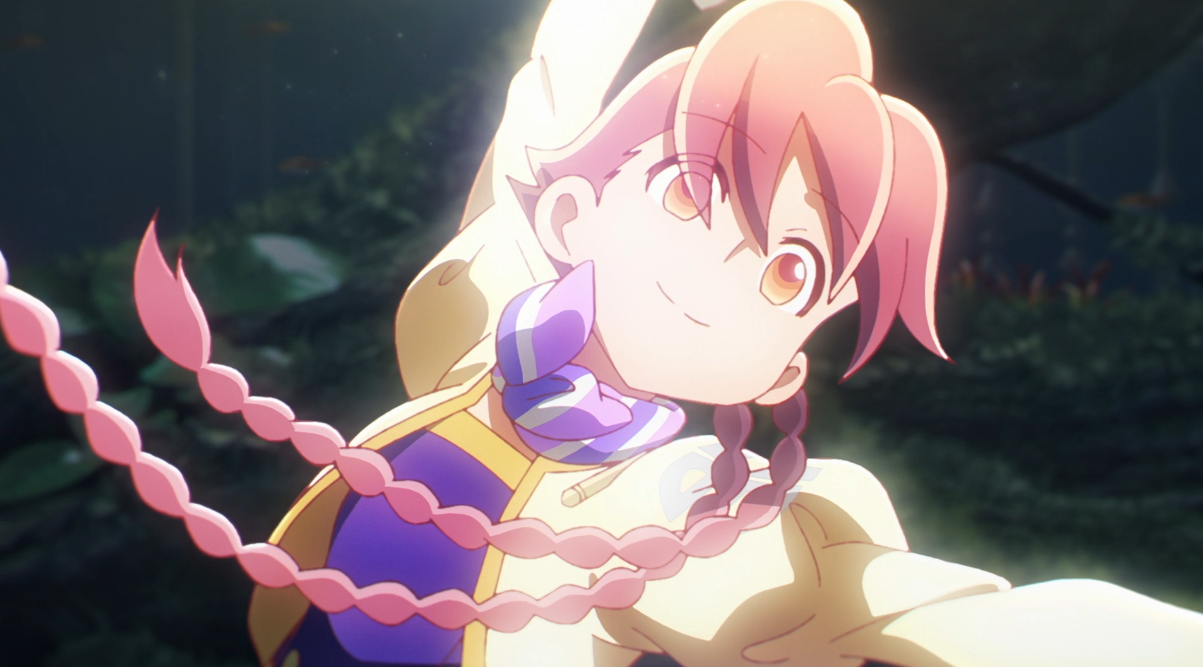
7. Tenshi ni Narumon (Studio Pierrot, 1999)
I’m glad that, despite everything, I managed to watch enough stuff that my top ten for the year is actually all stuff I genuinely enjoyed as an experience. That starts off with Sketchbook Full Color’s, a truly delightful slice-of-life show that made me remember the days back when the term iyashikei/healing anime was still in common use. It feels like that kind of anime, along with the MTK-style cute-girls-doing-things-cutely, has kind of vanished in the current anime landscape. That’s not really to mourn their passing; there was a truly thin line between those shows being relaxing and just boring, but on the other hand that trend did allow for such cloudy productions as Sketchbook Full Color’s to exist. I’d probably say Sketchbook is the most pleasant of the shows of its ilk I’ve seen, from its all-timer character designs to the way it eases through scenes. And they didn’t even need to go to another world to have a slow life!
Speaking of things that really are gone, though, how about adventurous action OVAs like Read or Die? I know there was some truly noxious shit that came out that strain of anime, but maybe getting fun paper-superpowered spy action flicks like R.O.D. balance them out. I was rambling about creativity earlier, and something about paper-centric abilities really hits that particular spot for me. Magic-ifying everyday objects isn’t an unheard of idea, but as with all ideas, the joy is in the execution, and the Read or Die OVAs have both the directorial and animation chops to execute Yomiko’s escapades and touching connection with Nancy. More on that later.
Back in the present, Kusuriya’s second season fell a bit flatter for me, sadly for reasons outside its control. The monkey’s paw of a great show getting a second season always seems to be curling as the feckless strain for profits pushes productions to the breaking point, and yeah, MaoMao’s adventures were neither as elegantly delivered or written as in the first season. I also just found the larger arc with Loulan-Shisui’s family to be less than compelling. My lack of interest in her father and mother as characters and their key roles in all the plot stuff left me cold, including Loulan’s penultimate scene, which really shouldn’t be so. Still, MaoMao is MaoMao, and watching her navigate the many incidents Kusuriya sends her way is inherently good watching.
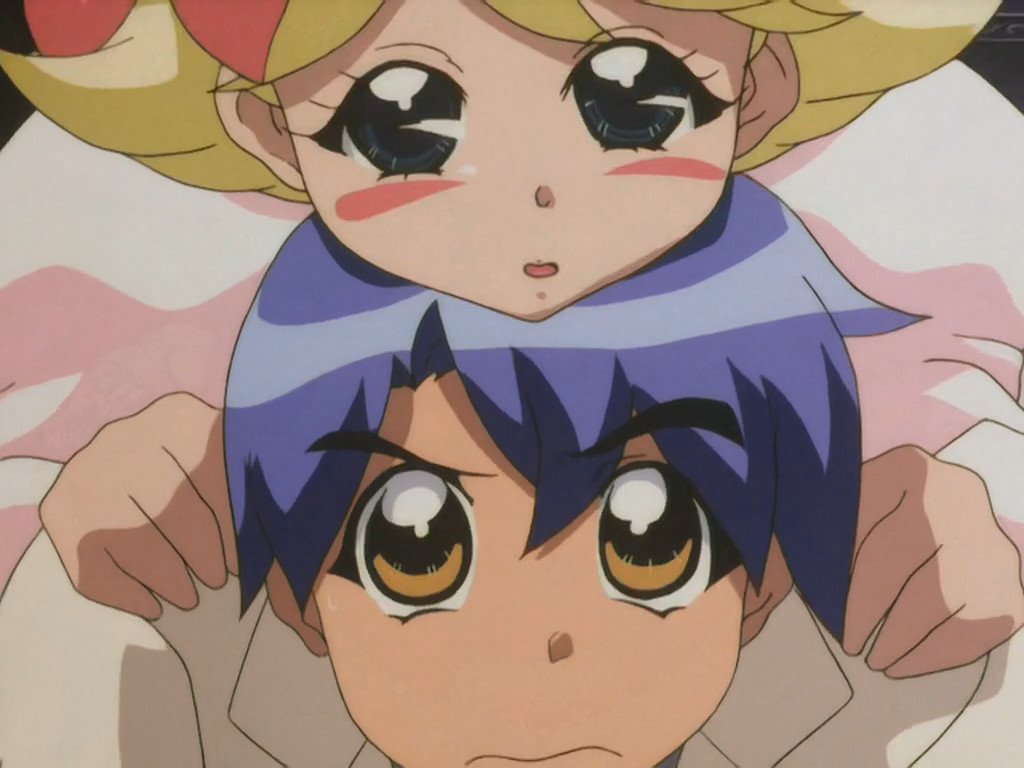
But enough about modern day anime—let’s talk about what’s probably my find of the year: a little-known, extremely silly, perfectly anime show called Tenshi ni Narumon. Directed by one of the many creators who came out of Revolutionary Girl Utena, Hiroshi Nishikiori, Tenshi ni Narumon both pays clear homage to one of anime’s inescapables and also very much does its own thing. In turns, it’s funny and goofy, emotive and touching, and throughout directed and animated with the kind of cartoony playfulness that makes anime so delightful. It’s not the best thing I watched this year, but it might be the most anime, the most emblematic of the weird mixing of childish joy with adult presentation, a sparkling experience from some twenty-odd years ago that sadly feels far from much of what we see these days.


VII. A Word on Things Unfinished (and Unstarted)
VIII. Stuff That Appeals to Me
6. Sousei no Aquarion: Myth of Emotions (Satelite, Winter 2025)
5. BanG Dream! Ave Mujica (SANZIGEN, Winter 2025)
4. Yofukashi no Uta – Season 2 (LIDENFILMS, Summer 2025)
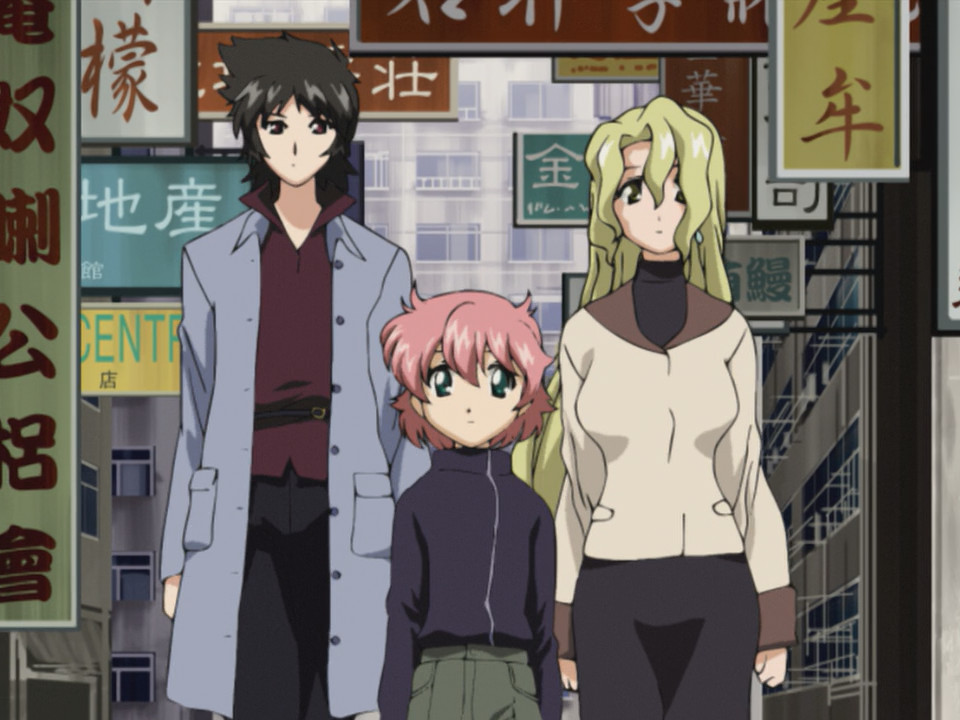
At last, we come to the stuff that makes anime worth watching. The Aquarion franchise is really nothing like Tenshi ni Narumon, but it might be “anime” in the exact same way. After the disappointment that was Aquarion Logos, Myth of Emotions is a return to form for my favorite series about things that happened 12,000 years ago. It’s emotive, silly yet serious, and has its own distinctive sense of a fictional world. Although calling any Aquarion science-fiction seems a bit off, getting giant robots and spooky extraterrestrial monsters mixed with reincarnation and emotional-spiritual abilities is immensely refreshing amidst the torrent of generic fantasy. It certainly also helps that Aquarion MOE is also visually distinctive; Masashi Kudou’s character designs are about the furthest thing from commonplace, and even the use of 3DCG started to have a certain charm by the end. It’s not the most explosive work to come out the Kawamori extended universe, but in 2025, even a solidly (dare I say conventionally!?) good Aquarion makes for a refreshing, enjoyable experience.
Ave Mujica, on the other hand, was anything but refreshing, but it was a hell of a ride. Sakiko did nothing wrong, and for some reason basically no one else who watches the show seems to understand that even if Ave Mujica (the band) is a contrivance, Sakiko is still an artist trying to express herself through the artifice of performance and music. The loathsome Nyamu truthers, on the other hand, celebrate their cat goddess’ lack of authenticity as girlboss grindset, condemning Sakiko’s flaws while excusing Nyamu’s self-centered, sociopathic behavior for being amusing, placing the blame for all ills exclusively on Sakiko despite the fact that Nyamu is the author of her own demise in the most tangible of ways—that is, if you have not been blinded by the “charming” reveal that Nyamu has a good relationship with her family. Good for her. If only such advantages had been afforded to Sakiko, who, again, did nothing wrong.
Anyways.
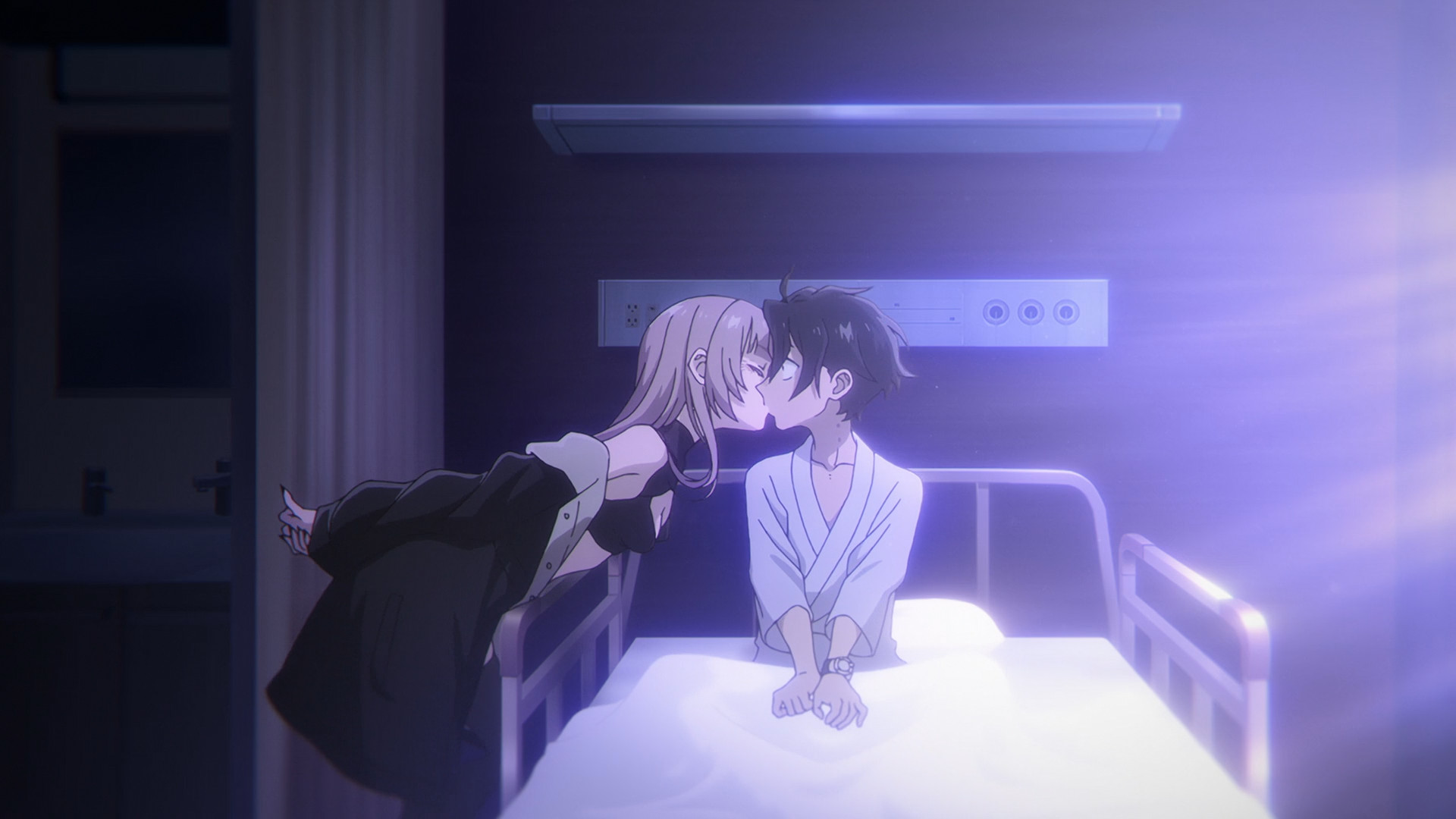
Yofukashi no Uta‘s return brought us more Nazunachan, possibly the most endearing girl of the entire year for a second year running. If best girl wars were still a thing, Nazunachan would be running the table. I do find the way the story is navigating the tension between Kou’s lack of feelings for Nazuna and his obvious… interest in? attraction towards? a bit fraught when it comes to suspension of disbelief, but their relationship continues to be properly endearing. It does strain the imagination, through, truly, that Nazuna could deliver the best vampire kiss since Vanitas and still have Kou not falling for her, but I have to admit that is a bit of self-insert work on my part (I would have been long gone), and Kotoyama’s interest exploration of the differences between attraction, romance, and love is far more interesting.
But what about the Sawashiro-voiced, smoking detective? you might be asking. Frankly, I found that particular arc to be a bit rote. It’s hardly the first “I became racist against monsters after they killed my family” plotline, even if the resolution more or less being that Anko’s passion for revenge burns out is better than what most such stories have to offer. This might sound like damning with faint praise and raise questions of Yofukashi no Uta‘s deserving of its #4 spot. But the answer there is very simple: nazunachankawaii.


IX. An Arbitrary New Section for the Top Three of the Year
3. R.O.D. The TV (J.C. Staff, 2003)
2. The Colors Within (Science SARU, Winter 2025)
1. Shoushimin Series – Season 2 (Lapin Track, Spring 2025)
Trust me, I was as surprised as anyone to find that R.O.D. (aka Read or Die) the TV wound up eclipsing the OVA to such a degree in my final assessment of my 2025 anime watching. I suppose that’s the power of a fun concept getting a full 26 episodes to flesh out its characters, even delaying the return of Yomiko Readman far longer than any modern day show could tolerate. Found family stories aren’t all that unique even in the anime space, but the blend with spy-flim-esque world-domination plotting (with a truly hilarious British motive) really makes the time with the Paper Sisters shine. HIt’s honestly shocking to me that R.O.D. isn’t a more popular recommendation as a cult classic. It aired the same season as the original Fullmetal Alchemist adaptation, Planates, and Gunslinger Girl, yet somehow all of those seem to have transcended R.O.D. in terms of cultural awareness (not that any of them are really major names in the Jujutsu Kaisen world in which we live). Or, rather, perhaps it would be more accurate to say that R.O.D. didn’t manage to ascend to their level. This is baffling to me, as Read or Die is insanely fun, with lovable characters and inventive fights. It was definitely the third best experience I had watching anime this year.
But if you want to talk about things that truly touched me, you have to make space for The Colors Within. It’s not often I see an anime film in theaters (it came out in the US in winter 2025) and then immediately text my mom to tell her she should go see it, but The Colors Within is the kind of warm yet substantive work you can do that with. It’s always interesting to see how Catholicism gets depicted in anime, and although The Colors Within offers a somewhat narrow perspective (whether you see Catholicism in a good or bad light, I think you can agree with this), it was indeed pleasant to see the setting of The Colors Within offer an image of Catholicism that is small, personal, and kind. That’s not really what the film is about, but it did stick out to me, as did the gorgeous music. “Walk” is my favorite of the three performance tracks, but no matter which individual thread you pull out of this film’s tapestry, you really can’t go wrong. And it’s just as lovely as a whole, too.
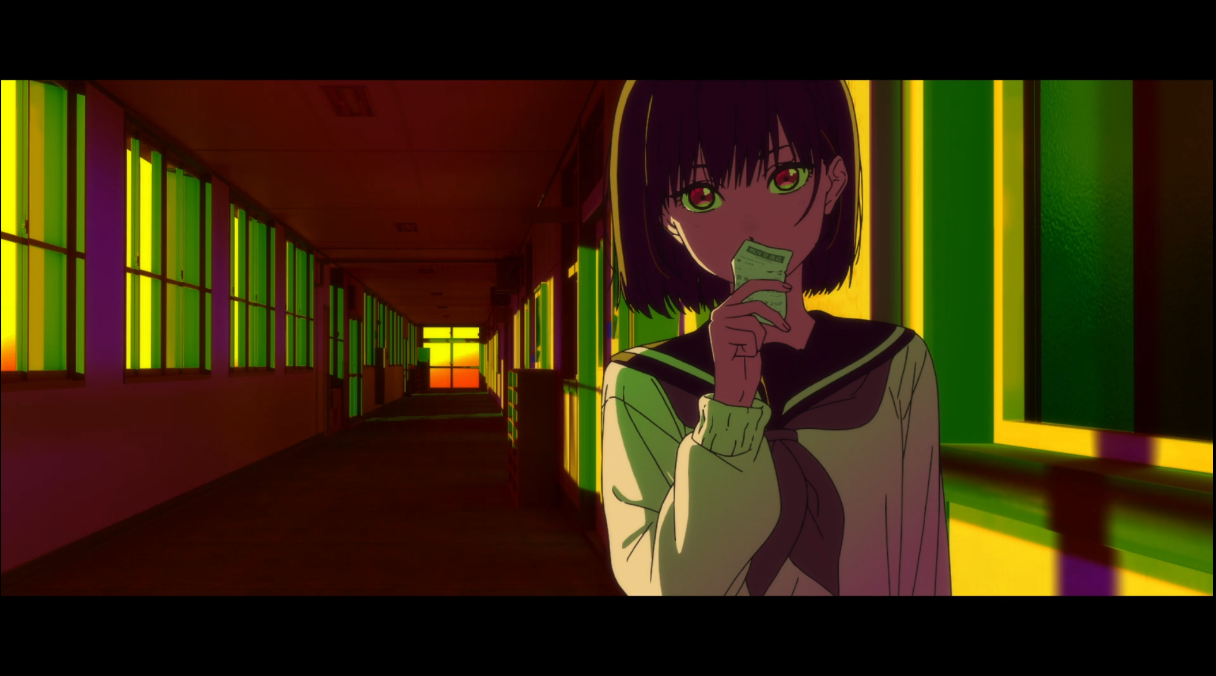
That brings us to my top anime experience of 2025: the return of Osanai Yuki, Kobato Jogoro, and Honobu Yonezawa’s Shoushimin. Kvin over at Sakugablog has already done the hard work of analyzing the visual production of the series for me, which leaves me to recall the way watching Osanai blaze through this second season compelled me to livepost in a way I haven’t done in years. I try to be discerning and use the term “sickos” in moderation, but if any anime of 2025 deserves it, it’s definitely Shoushimin. It’s such a “you get it or you don’t” kind of thing; Yonezawa’s particular brand of characterization turns the delicacy of Oreki and Chitanda into entertaining, sympathetic, harmless (unless you’re Urino) sociopathy, and if that’s for you, like it was for me, you just can’t not have an amazing time. I could watch Osanai and Kobato forever.

Anyways, that brings us to the end of 2025. I feel like I say this every year, but I really would like to be a bit more diligent about watching anime in 2026. I’m off to a good start as far as that’s concerned, but as with such goals, the challenge always comes with keeping it up for the entire year. I really do think that part of my cynicism about the overall state of anime right now is justified, but also that I might feel a bit better if I put in more effort, so let me at least do what I ought.
Here’s to a good year of anime watching!
III. The Secrets of the Silent Witch: A Case Study
Worldbuilding these days has come to have a particular connotation, what with its commodification as a “hobby” area, a topic that Brandon Sanderson lectures on, and omnipresence in general in certain writing spaces. People talk about magic systems (a term I hate) and many other things. It’s very in vogue, but I find the way people speak about worldbuilding to be somewhat narrow in focus. That said, anime like The Secrets of the Silent Witch have got me rethinking things a bit.
Why is this?
One of my biggest complaints about The Secrets of the Silent Witch was that it located Monica Norton in a school for nobles clearly modeled on a certain slice of otome games. Now, I have no problem with otome games in general, however, to me this choice of setting shares a lot of unfortunate similarities with many isekai. Just like Silent Witch selects a generic vaguely European-ish aristocratic academy, isekai paste their stories over unconsidered RPG worlds (much has been memed about the iconic circular isekai city with its adventurer’s guild). The thing is—I expect this kind of thing from isekai. But Silent Witch seems to actually care about its characters. So, why the lack of similar care for the world they inhabit?
To answer my own question, there is at least one obvious answer: if the author cares mostly about their characters, why waste their time inventing a unique setting when they could just mimic an existing type? That way, they get to deal with the stuff they care about without being troubled by the admittedly challenging task of creating a world. I do understand this to some extent, and especially so when it comes to source material that comes from light novels, where it seems more and more authors are coming from a web novel background. I don’t mean to denigrate or even typify web novels by saying this, only to point out that there are different standards at play for novels that get popular online. Essentially, these are amateurs getting their stories turned mainstream, and that means stories coming from a place where the expectations are different.
At least, this is one guess I have. Another answer might be that in light novels, audience demands for worldbuilding are simply smaller compared to those for plot and character work. Another might be that anime based on manga, even if worldbuilding in its broadest sense isn’t a major priority, still come from source material where an artist has to make legible their vision for their world out of sheer necessity (although… not always).
Those reflections aside, even as someone who isn’t frothing at the mouth for “lore” or “worldbuilding” as they are often understood, I do find myself unenthused by the genercism of setting that plagues anime modern anime. In this way, perhaps Silent Witch is just a bit of a casualty of a dissatisfaction I already possessed. But I don’t think that’s entirely it. I do think there’s room to criticize the setting here—and elsewhere—for putting offering little more than a milquetoast canvas for the characters to navigate.
V. What Is Creativity? What Is Passion?
You really have to be careful with these things, because it’s not as if I know anything about the creator of The Water Magician or The Secrets of the Silent Witch. It’d be easy to accuse (what I perceive as) their lack of creativity as a lack of passion, but I don’t think that’s fair.
That said, when you read about how Apocalypse Hotel was sort of a passion project for CygamesPictures’ president, watch the unhinged movements of 100 Girlfriends that could only come from a creator fully bought into their own work, or consider Kanon‘s special marriage of KyoAni’s attention to detail with Jun Maeda’s lack of restraint, I can’t help but feel that these are works that are fundamentally different. At the same time, what’s really wrong with LN adaptations making their own creative derivations on existing trends? I feel like condemning them wholesale is a bit… unfair.
But all these factors do mean something in the art. To me, there’s just no comparing Jun Maeda, a writer who was bullied off the internet for The Day I Became a God, continuing to follow his own creative urges in Heavens Burn Red (Wikipedia tells me he deactivated his socials after more criticism on that one—those people are losers) and his work to isekai slop. He might be a sometimes maybe good, sometimes maybe shit writer, but I would rather rewatch his dumbass Makoto arc in Kanon 1000 times before going back to The Water Magician, the Proseka movie, or even Silent Witch one more time. That may say more about me than anything, but if I must be persecuted for liking bad things that are enthusiastically themselves, so be it.
Lest I be accused of Maeda apologism here, let me remind myself that I’m also applying this to unexplained principle to 100 Girlfriends and Apocalypse Hotel. In both of these anime, in different ways, there is a sort of intangible energy that, to me, comes from passion and creativity. Like, the latter’s OP features a semi-discordant contrast between the vocals and instrumental that defies the trend of big-name bands doing easy to digest songs to lead off shows (and this coming from someone who loved that Silent Witch gave me two wonderful Hitsujibungaku songs). If that’s not a commitment to your art being more than just a vehicle for money-making promotion, I don’t know what is. Hell, even 100 Girlfriends brought back the somewhat anachronistic all-seiyuu ED song!
Anyways, all this is just to say that I think you can tell, in modern terms, what anime have the sauce and which don’t—and that perhaps a commonality is just how much creativity is allowed to squeeze through the crushing fingers of capitalism.
VII. A Word on Things Unfinished (and Unstarted)
When ranting about what the anime industry isn’t giving me, I think it’s worth noting that the shows appearing on this list aren’t a complete reflection of everything I saw—just what I finished. I know I’m under no obligation to do so, but after complaining so much I do feel like I ought to note that I did try out other stuff that broke away from the trends, even if I didn’t finish it out.
That list includes such productions as Momentary Lily, the latest of Gohands’ color-vomit offerings sadly plagued by just horrible in-episode pacing decisions. There’s also Gundam GQuuuuux, which I do intend to go back and finish, despite the mixed reactions it seemed to garner. Summer Pockets I started in the wake of finishing Kanon while looking for more of the (apparently!) unique feeling that many VN adaptions seem to have, and was largely pleased to discover had a very solid grasp on the “eternal summer” mood I wanted; that could even be a post of its own, if I was still doing that kind of thing. KyoAni’s CITY had a stunner premier, and I’ll likely finish it eventually for the prestige even if I just don’t find that Arawi really appeals to me. Ruri Rocks was too horny. Chitose in the Ramune bottle was irritating. And SI-VIS actually seemed pretty good and is a current biking show.
That’s actually some good variety, and perhaps if I’d had the impetus to finish all of them I would have come away with a different sense of what anime is like right now.
Stuff like Honey Lemon Soda, Sorario Utility, Witch Watch (we always respect witches here), and Mono, shows I looked at but ultimately didn’t find time or desire to start, also all could have contributed. You could probably rightfully take all this as evidence that the real problem is me and not anime as a whole, but I honestly don’t think that’s the case. On balance, the tidal wave of reincarnation anime seems to be, if not overwhelming, then at least oppressive.
 Mage in a Barrel
Shoutout for mentioning Tenshi ni Narumon, one of the most underrated series ever made. Besides being a truly “anime” anime, as you note, and having a profoundly earworm of an opening, it just hits the perfect balance between wacky, funny, emotional, and profound in a way very few narrative works of art do. Even though I feel it doesn’t quite stick its landing, it’s an unforgettable work for anyone who vibes with it (admittedly a small crowd).
LikeLike
It really is just pure anime. I agree with you that the ending isn’t quite perfect, but it’s such a fun watch from a pure entertainment perspective that I don’t know it too much for that.
Speaking of the small crowd, it’s probably the least-watched anime I’ve ever seen. It’s got less than 10,000 people with it on their lists on MAL, and under 3,000 ratings, which really makes discovering and watching it feel a bit like being in a club of people who managed to stumble on something pretty special.
LikeLike
I always forget what aired this year or last year by the time a year comes to an end, so I’d need a list to remind me…
I really loved the ROD TV show; I’ve not yet seen the OVA, so that’s something I’ll definitely come back to at some point.
Interesting to read the part about Silent Witch and Worldbuilding. I actually found there’s been an interesting through line in the background. Dragon Slaying. We have a shut-in geek protagoinist we follow around, which naturally limits what we see, but the moment she becomes aware of the wider world is a window into the world. So she kills dragons and saves people, and that’s pretty much all she thinks about that. She has this noble supporter at school, who basically re-inforces this issue. But then there’s the issue of the bullying, and when the bullies are chastised we see a glimpse of the wider world: not every region has the means to defend against dragons, and getting rid of them is politcal bargain chip. And then, later, there’s the fringe region reveal about the friend – where dragons are a constant threat… There’s definitely a background world there that exceeds what we see, and it seems important. As a throughline, that’s never explicitly stated, but it feels sort of important non-the-less.
That said, what we see is definitely a run-of-the-mill setting.
And I can’t talk about this show without praising Monica’s voice actress. From the quiet mumbling to the meep sounds, to the geeky ramblings about math, to the quiet confidence when broaching difficult subjects, that’s quite the range there. One of the best performances of the year, I’d say.
I watched Sketchbook Full Colours a year or two ago, too. Quite liked it.
I barely remember Kanon 2006. I liked it back then (not in 2006, more like 2009 or 2010), but I’m not sure it still holds up. I liked Canon and Little Busters, but most of the other Maeda stuff isn’t really my cup of tea. Needless to say, I’m not looking for shows in that vein, and I dropped Summer Pockets a few episodes in.
Shoushimin Series is always welcome on my watch list. Interesting take on “non-evil” sociopaths, which is rare.
As for the shows not watched: Sorairo Utility was fun all the way through and had good style. Honey Lemon Soda was good, too, but it took a while to grow on me. Witch Watch was low-key enjoyable all the way through – lovable dorks the lot of them. Comedy of the year goes to Ninkoro, though, for me: it acutally has the edge a dark comedy needs.
It was quite a good year for me, actually, but I can’t remember off the top of my head because of which shows. I’ll come back for the other posts some time later.
LikeLike