Watching as Myself: Anitwitter, Me, and Sound! Euphonium 8

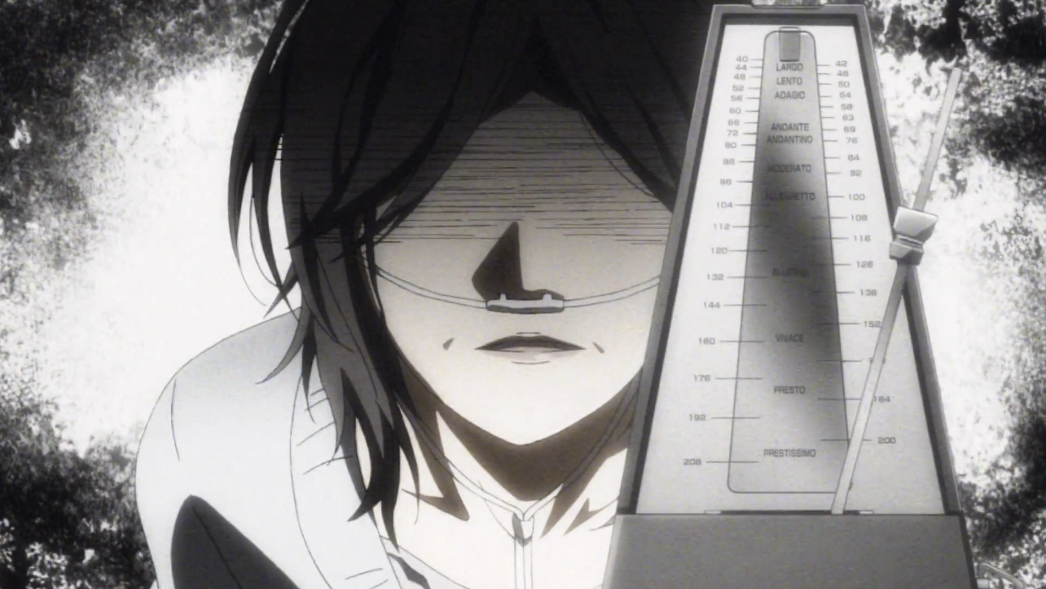
Up until episode 8, Sound! Euphonium had been one of my favorite shows of the current anime season—beautifully produced, delicately written, nostalgic in the extreme, thoughtfully reflective on the nature of competitive high school music programs. But, when episode 8 hit the Anitwitter waves, there was…a shift in focus I wasn’t expecting. And the effects of that shift were, well…I didn’t realize what they were for a while, but I thought the overall arc of my experience with the episode was interesting enough that I ought to bring my immediate reactions over from Tumblr and make a more reflective piece out of this fascinating experience.

Sound! Euphonium

Continue reading

Thank Kanbaru: Personal Narratives, “Feminist Anime,” and Normalized Media Portrayals

Let it be known that asking me questions of ask.fm is like is a sneaky way to get me thinking about topics you’d like me to cover in a blog post…this was originally an ask.fm answer, then grew too large for the ask.fm and so became a tumblr post, then kept growing and became more of a philosophical manifesto/personal story than I had originally intended, and thus here we are. To begin, I know I’m treading on sensitive ground here and so, of course, I’d love to hear feedback in the comments. [1] For me, this is very much still a topic I’m learning about and pondering through. But here’s where I am right now.

Monogatari Continue reading

Why Danmachi Works: Moe and Family Soften the Heart

I’ve been thinking lately about the difference in my personal response to the first couple episode of Danmachi (aka Is it Wrong to Try to Pick Up Girls in a Dungeon?) from the reaction of the wider anime-watching public. If you’ve been pretty much anywhere online where discussion (or, in this case “discussion”) about anime happens, you’ve probably seen the Hestia fanart craze that blew up pretty much from the moment the first episode of Danmachi finished airing. The reason? Her, uh, unconventional method of supporting her breasts—known around the fandom as the “boob string.” But, for me, the blue ribbon encircling Hestia’s torso was never something that really caught my attention before the fanart craze and meme running started and I found myself actually a bit peeved by the intense focus on a relatively inconsequential element of a show I liked for other reasons. But why should this be so?

Danmachi

Continue reading

The Rose of Versailles: Oscar & the Woman’s Game

If you sit between two worlds, are you really part of either of them? Both will make their claims on you, no matter how you resist. Such is the uncomfortable place Oscar François de Jarjayes finds herself in at the end of episode three of The Rose of Versailles. Despite her desire to remain on the sidelines, watching the tense “duel of the ladies” from a happy neutrality, the news that Lady du Barry has, through the order of the king, acquired Oscar’s mother as her handmaid shocks Oscar and will eventually force her into the realm of female court politics (or so I presume).

But there’s more to it than the implied threat to Oscar’s mother…

The Rose of Versailles Continue reading

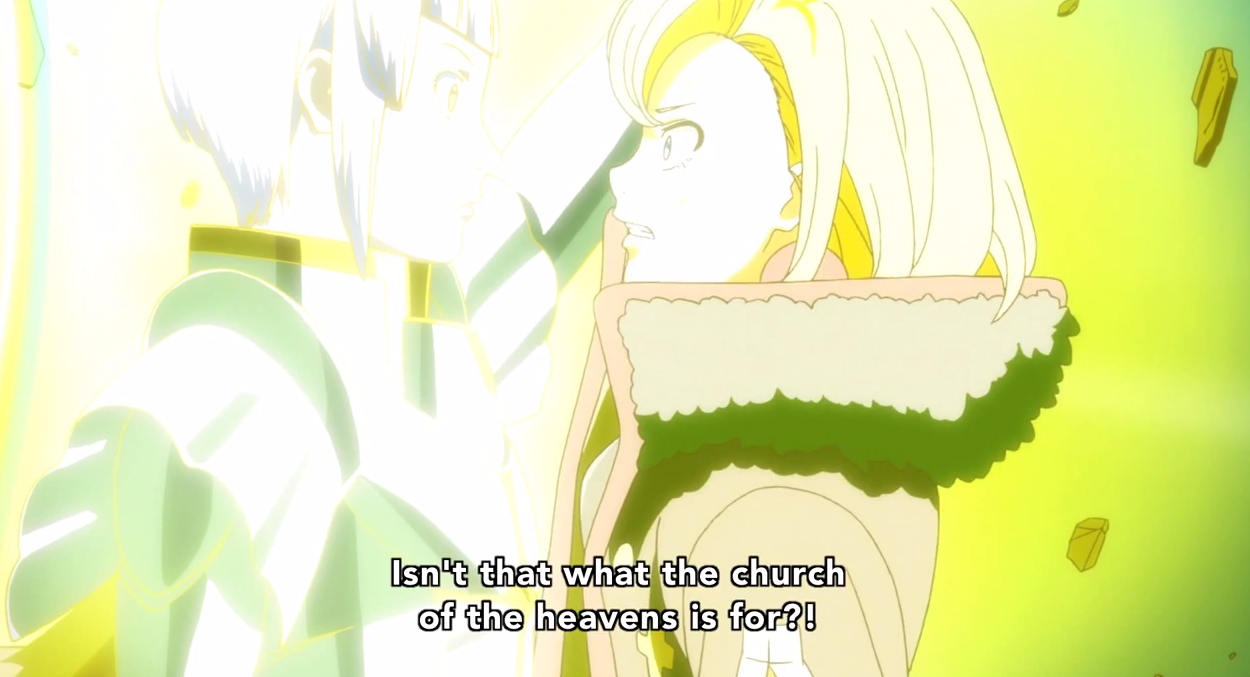
The Absence of the Church of Heaven: Junketsu no Maria and Catholicism

So, the headline here is that I’m dropping Junketsu no Maria and that I’m pretty bummed about doing so. I like, even adore, a lot of the peripheral elements of the show—Maria herself, her little posse of misfits, the character designs—but the show’s handling of Catholicism and the Catholic Church, which was more or less the focus of this episode, has left me both uncomfortable and a bit upset after watching the second episode. And, as much as I want to, I just can’t ignore those warning bells in my head.

Junketsu no Maria Continue reading

Is it Okay to Like Your Lie in April?

If you’re dialed in to the anime fandom, particularly the simulcast-watching, blogging segment of the fandom that I inhabit, you’ve probably heard at least some hints of the controversy that’s been surrounding noitaminA’s new show, Your Lie in April, a 2-cour anime produced by A-1 Pictures and based on the Kodansha Manga Award winning manga by Naoshi Arakawa.

Near as I can tell as someone standing apart from those who are decrying the show, the bulk of the outcry surrounding KimiUso is derived from the show’s treatment of protagonist Kousei’s traumatic-abusive childhood at the hands of his now-deceased mother.

Now, I’ve always tried to form my own opinions of a show divorced from the complaints and praises of other, but KimiUso has been something of a special case for me. This is, partially, because I’m hearing these complaints from other bloggers whom I personally like and respect, but also because the criticism seems not to be directed towards KimiUso‘s technical aspects so much as it targets ethical concerns, excepting cases where the two merge together.

Your Lie in April

Continue reading

Akame ga Kill: A Reflection on the Futility of Violence?

So, I’ve been watching Akame ga Kill for a while now and I’m starting to wonder if there’s actually more to this show than just extreme violence, no censorship, and an infatuation with grisly deaths. Is it, perhaps, a reflection on the futility of violence as a solution or as a method for change disguising itself as a cheap shounen thrill fest?

I’m well aware that on the surface, this seems an absurd suggestion—I myself, after the first episode, felt that Akame ga Kill did nothing less than glorify bloodshed by “justifying” it through the immorality of those who were being killed. 17 episodes and a few heartbreaks later, I’ve realized that, for all the characters who have died and who have been introduced and died, Akame ga Kill, Night Raid, and the Jaegers are no closer to any sort of resolution to their conflict than they were at the beginning of the story.

Akame ga Kill Continue reading

Forging a Community: 4 Lessons from the Crunchyroll 2014 Midyear Best Girl Contest Thread

As some of you may or may not know, I have been running an ongoing Best Girl tournament for the first half of 2014 over on the Crunchyroll forums. The contest ended about two weeks ago, with Stephanie “Steph” Dola from No Game No Life defeating Noragami‘s Hiyori Iki (I voted for Hiyori) by a single vote.

Now, while the final winner of the contest was a bit of a disappointment for me (can you hear the hype train coming ’round the mountain?), there were a lot of cool things I saw and learned during my time acting as the admin of the contest. I was fortunate to have two other Crunchyroll users, sonic720 and LoomyTheBrew (who made most of the graphics for the tournament), assist me with the massive task of running a tournament that recorded almost 1400 votes through all rounds across over 2500 pages, nearly 40,000 thread replies and never left the front page of the forums until just yesterday. I have no stats to back up this theory, but I’m fairy sure the thread was also the fastest growing thread in Crunchyroll forum history, at least in the time that I have been active on the forums there. And it’s ongoing.

Crunchyroll Best Girl Tournament 2014

The Final Four

Continue reading

I Can’t Play Visual Novels—On Katawa Shoujo

Warning: Spoilers Ahead for the Visual Novel Katawa Shoujo.

As some of you (if you follow me on Twitter) might know, I’ve been playing a Visual Novel called Katawa Shoujo for the past week or so. And, after that long playing, I’ve come to realize that I’m not sure I’m the type of person who can play a game like this.

https://twitter.com/iblessall/status/494667258489102337

Before I get into the details of why I’m not sure I can continue playing this visual novel, let me give you all a brief history of my experience with the game to this point. Katawa Shoujo is the first VN I’ve ever played—sure I’ve heard about then, seen people play them in anime, seen anime based on them, but I’ve never actually played one myself.

Continue reading

A Demonstration of Why Premise Criticism is Silly

I sometimes wonder if people realize that criticizing the premise of most fiction is a useless exercise. As I’ll demonstrate later on, if you approach any work of fiction in the right way, you can make the premise sound stupid. An attitude that seeks to find a reason to dislike a premise will always find one.

But what defines a story as good or bad isn’t the premise itself; that’s simply the foundation. What’s important is how well that premise is executed. Can they make you suspend your disbelief well enough to make you accept that there’s a kid who just won’t get in the freaking robot? Can they make you accept that there’s a kid whose face is naturally attractive to beautiful alien girls and beautiful alien boys who look like girls?

Non Non Biyori Continue reading