
There are a lot of different ways to watch the same show. Myriad perspectives and ways of reading into a show’s text and subtext exist—and I don’t believe that all those different interpretations are exclusive to our particular headspaces. Why do I bring this up? Because my take on this episode differs somewhat radically from my thoughts on last episode. And that’s okay. I spent a lot of time thinking about what some of you guys said in the comments on my last post and I spent this episode trying to think about it in different, more positive terms. And, you know what? It made for a pretty great experience—much of it thanks to some of the cool things Ore Monogatari!! was doing this week.
Episode Write-ups

Blood Blockade Battlefront, Episode 5
Right so, deep thematic analysis, resonance between cinematographic technique and unstated meaning…it’s all there in Blood Blockade Battlefront. It’s exceptional, in a way only a Rie Matsumoto show could be. Those qualities…have almost not bearing whatsoever on this episode—because this episode is about one thing and one thing only: having a good time. And if you didn’t enjoy this episode, you might as well get off the giant car-eating monster vehicle now, because this is the reality of Blood Blockade Battlefront. And this is my favorite episode of the season.

Ore Monogatari!!, Episode 6
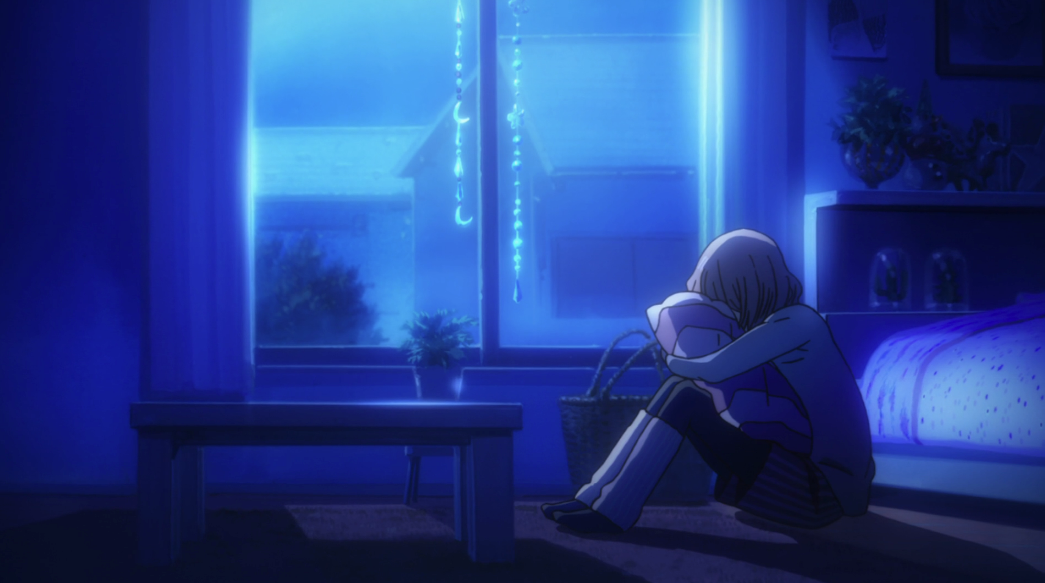
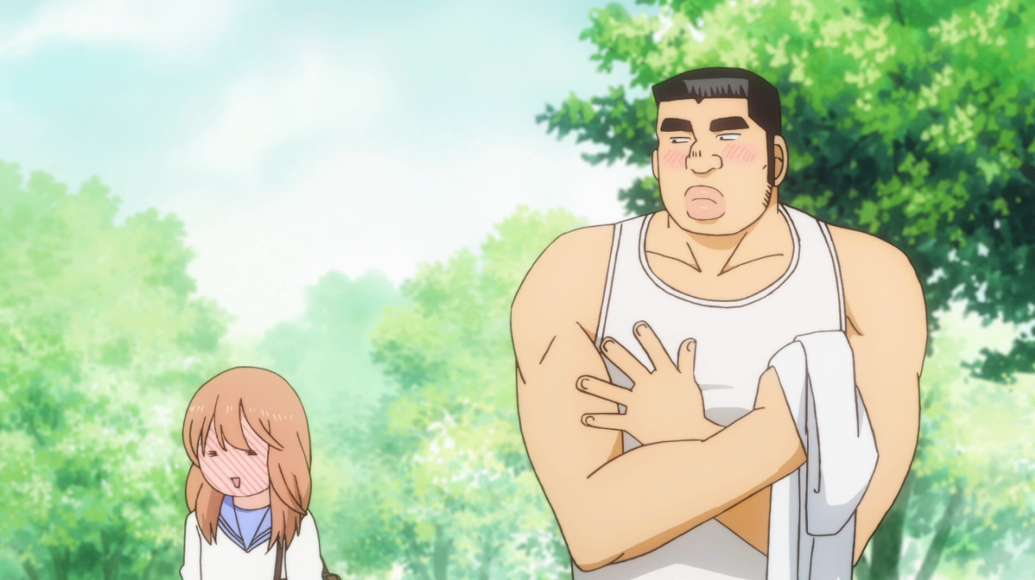
As expected, this episode of Ore Monogatari!! brought to a close the relationship tension between Takeo and Yamato—and, as I expected, Yamato’s “secret” was revolved around guilt induced by Takeo’s perceptions and expectations of her. It’s not like this is an uncommon thing; they’ve just started dating and still don’t really know much about the other person yet. But, while it’s nice to see the tension resolved in Ore Monogatari!!‘s typical adorable fashion, I had a few problems with both the execution and the content of the episode.
Blood Blockade Battlefront, Episode 4
Unlike episode three, which I found to be quite the tough nut to crack, episode four was a little easier to figure out in terms of its visual code. It’s no less intricate or well-constructed; just a little easier to access. At this point in these write-ups, I suppose I should note that I’ve basically thrown all doubts about “over-analyzing” into the wind. I’ll talk about this somewhere in this post, but the attention to detail in Blood Blockade Battlefront, even when it’s not using super fluid animation, is astounding and has entirely convinced me that I can interpret away with enthusiasm knowing that there are people behind this show (Rie Matsumoto, most prominently) who really care about what they’re doing and are offering up a work of art worthy of our attention and analysis.

Ore Monogatari!!, Episode 5
So, I’ve kind of felt like I’ve been spinning my wheels with these posts for the last couple weeks, but no longer! Ore Monogatari!! is still super cute, but this episode’s escapade into the river of character secrets and insecurities has finally given me a reason to dive deep beyond the adorableness and really pull out some brainchildren to talk about…too much?
Blood Blockade Battlefront, Episode 3
Blood Blockade Battlefront is a pretty fun show—not only because it’s wacky and energetic and unpredictable, but because each episode kind of feels like a puzzle to me. I’ll admit, I was pretty stumped on this one (although that’s not really the reason it took me so long to get around to writing this post. This episode, in particular, especially coming out of episode two’s hugely concentrated dose of imagery, felt disconnected and weird and not really quite right to me the first few times through—and then I realized this was an episode of contrasts and it all made sense. Well, as much as it can.

Ore Monogatari!!, Episode 4
So, it’s time to venture into relatively unexplored territory, at least as far as romance anime go. What do you do in a romance anime after you already have a canon couple? It’s not like it’s never been done before, but even those that have (looking at you non-Ore Monogatari) don’t usually spend time on the implications of life after the courtship has ended and the relationship has begun. Happily, because Ore Monogatari!! is built with the relationship as its main feature, not just a related thread, we get episodes like this—and, other than (what is starting to becoming a troubling pattern of) diving into melodrama, it was quite lovely.

Ore Monogatari!!, Episode 3
IT HAPPPENNNNNEDDDDD!!!!!
Ahem. Sorry. I usually try to keep my more, er, effusive expressions of my reactions to episodes to Twitter, but you guys saw the episode! You saw the same things I did! YOU KNOW. YOU KNOW WHAT HAPPENED.
Usually, I have some sort of idea of what I want to say when I start writing these posts—but I ain’t got no clue what I’m gonna say today. My brain is just a mush of warm, adorable fuzzy feelings. Because that’s just the sort of show Ore Monogatari!! is.

Ore Monogatari!!, Episode 2
I suppose I can just betray my character bias right off the bat so no one accuses me of hiding it later: I think Makoto Sunakawa is being set up to enact one of the all-time great bro roles in anime history. I really do. Of course, that’s not all I came away with from this episode—which was delightful, by the way—but the relationship between Takeo and Suna has really been the big focus of these early episodes as Ore Monogatari!! works to build their characters. Rinko, I’m sure, will get her turn, but right now Ore Monogatari!! is all about the bromance.

Blood Blockade Battlefront, Episode 2
Before I launch into this post, I want to direct readers to something I wrote over on Tumblr last night, an abbreviated essay called “Blood Blockade Battlefront: Style vs Substance(?) and Cinematic Language.” This essay lays out the theoretical framework this post will be operating out of—simply, that visual language is a valid semiotic code [1] capable of expressing meaning, just as more traditional methods are. So, the point of today’s post is to essentially lay out an example of how this is true, breaking down the way director Rie Matsumoto and her team have constructed a cinematic code that conveys information, themes, and ideas to the audience through the images on the screen.

 Mage in a Barrel
